The autumn-winter 2026 palette definitively buries the reign of neutral tones. The collections presented in recent weeks confirm a shift towards saturated colors, highly textured materials, and a return of structured pieces that we haven’t seen for several seasons. Three key areas deserve in-depth analysis to build a wardrobe that is both current and sustainable.
Textured materials and velvet: the true fashion marker of autumn 2026
Velvet is the material that distinguishes this season from the previous ones. Dresses, suits, evening wear: it appears on entire pieces, not just as details. RTÉ Lifestyle, in its analysis from September 16, 2026, identifies this return as a strong marker of autumn-winter.
We observe that textured materials are replacing prints as the primary lever of elegance. Leather, lace, thick textures: the silhouette is first built through touch, then through color. This shift changes the purchasing logic. A dense corduroy jacket or a structured lace dress carries a look on its own, without unnecessary accessories.
The analyses shared by Veritaxis’ fashion page allow for close monitoring of these developments, particularly in the segment of quality pieces that span multiple seasons.
For purchases this season, three textile selection criteria are worth more than just a glance in-store:
- The density of the weave: a short-pile velvet with a sufficiently heavy weight will maintain its shape after several wears, unlike lighter versions that quickly show wear
- The lining of structured pieces: a leather or velvet jacket or blazer without proper lining will lose its shape within a few weeks
- The maintenance compatibility: velvet and lace impose washing constraints that, if ignored, can destroy the piece before the end of the season
Midi skirts and saturated colors: elegant transitional pieces
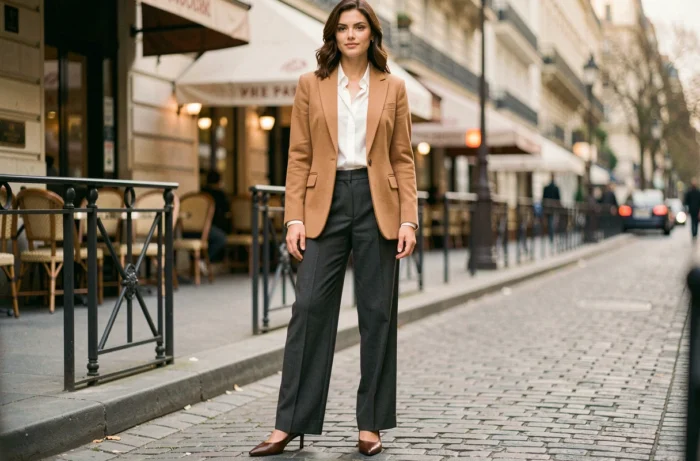
The midi skirt returns as a key piece of the autumn wardrobe. Fashion Times, on September 4, 2026, reports this evolution based on analyses from British Vogue and PORTER. Knee-length styles come in pencil, pleated, floral, or lace-trimmed cuts.
This return is not limited to office wear. Colorful and shiny versions fit into everyday looks. Paired with low-heeled ankle boots and an oversized sweater, the midi skirt creates a balanced silhouette without forcing elegance.
Color palette: saturated shades in the lead
Building a look around a single strong color remains the most effective method. We recommend limiting saturation to one statement piece per outfit. Brightly colored pants with an ecru top create more impact than a total monochrome look that tires the eye.
Butter yellow, already present in spring-summer 2026, continues into autumn accessories (bags, belts, scarves). This continuity between seasons allows for maximizing purchases over several months.
Circularity and sustainability: a concrete selection criterion for clothing
Circularity is no longer a marketing argument. In the European Union, regulations are gradually requiring that clothing be designed to be repairable and recyclable.
Concretely, this changes purchasing criteria. A piece made from mixed materials (polyester-cotton for example) will be more difficult to recycle than a piece made from a single fiber. Brands anticipating this constraint are already offering labels indicating compatible recycling streams.
Second-hand and resale: a reflex that changes the wardrobe
The resale of second-hand clothing is becoming widespread at a visible pace.
For a unique and elegant style, buying a vintage piece in velvet or leather is often better than a new entry-level equivalent. The textile quality of older pieces (stitching, thickness, finishes) frequently surpasses that of current productions at comparable prices.
- Check the inner seams and the condition of the lining before any second-hand purchase
- Favor pieces made from unique natural fibers (wool, cotton, linen) for longevity and recyclability
- Avoid pieces without a composition label or with an illegible label, as this indicates a textile that is difficult to maintain properly
Structuring accessories: the fashion highlight of the season
Structuring accessories are gaining visibility this season. The unique and visible accessory replaces the accumulation of discreet jewelry, a logic that runs through the autumn-winter 2026 collections.
Wide belts and structured bags complement this logic. A geometric leather bag, carried by hand, anchors a fluid silhouette. A thick belt over a midi dress marks the waist without resorting to a fitted cut.
Choosing a strong accessory per outfit is sufficient. Stacking several bold pieces produces the opposite effect of what is sought. The autumn-winter 2026 season rewards calculated restraint, not accumulation.