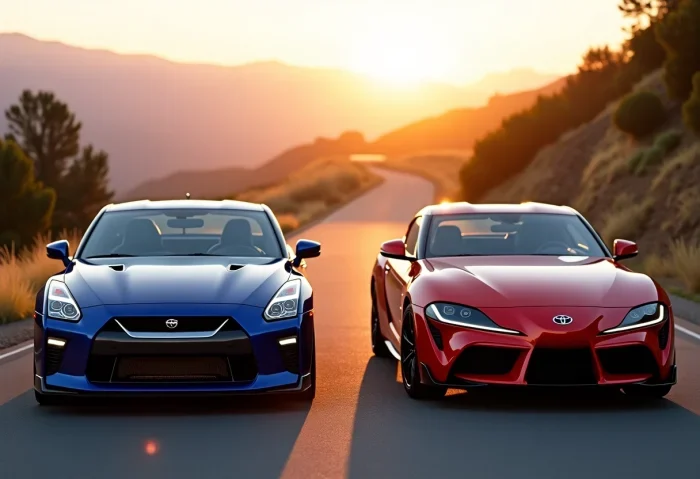
Japanese sports cars have always fascinated with their unique blend of advanced technology and bold design. Since the 1990s, iconic models like the Nissan GT-R, Toyota Supra, and Mazda RX-7 have made their mark on the automotive industry with impressive performance and the ability to compete with major European brands.
Today, this tradition continues with vehicles like the Honda NSX and Subaru WRX STI, which continue to push the boundaries of engineering. Comparing their performances allows for a better understanding of the innovations that place these speedsters at the top of international rankings.
Timeless Icons and Their Performance
Japanese sports cars have distinguished themselves through their technical features and value for money. Among the iconic models, the Nissan 370Z Nismo stands out with its 428-horsepower V6 engine and a top speed of 250 km/h. Produced until 2020, it remains a reference despite the cessation of its production. Its price of €79,998 made it a competitive option for performance enthusiasts.
Flagship Models
- Lexus IS 500 F Sport: Equipped with a 472-horsepower naturally aspirated V8 engine, this sports car reaches a top speed of 240 km/h for a price of €72,610. Considered one of the best Japanese sports cars, it embodies the brand’s expertise.
- Toyota Supra 3.0: With its 282 horsepower and a top speed of 250 km/h, the Supra 3.0 stands as an icon of the Toyota brand, offering a unique driving experience for €69,300.
- Honda Civic Type R: This car features a 315-horsepower engine and can reach 272 km/h. Priced at €57,220, it also stands out for its spacious trunk of 669 liters, a significant asset for a sports car.
- Mazda MX-5: This popular roadster, with 184 horsepower and a top speed of 219 km/h, is appreciated for its affordable price of €30,850 and its lightweight of one ton.
Alongside these models, the Subaru Impreza WRX or STI remains a timeless classic. Known for its rally performance, this car offers a dynamic driving experience and unparalleled reliability. It continues to embody the spirit of Japanese sports cars. 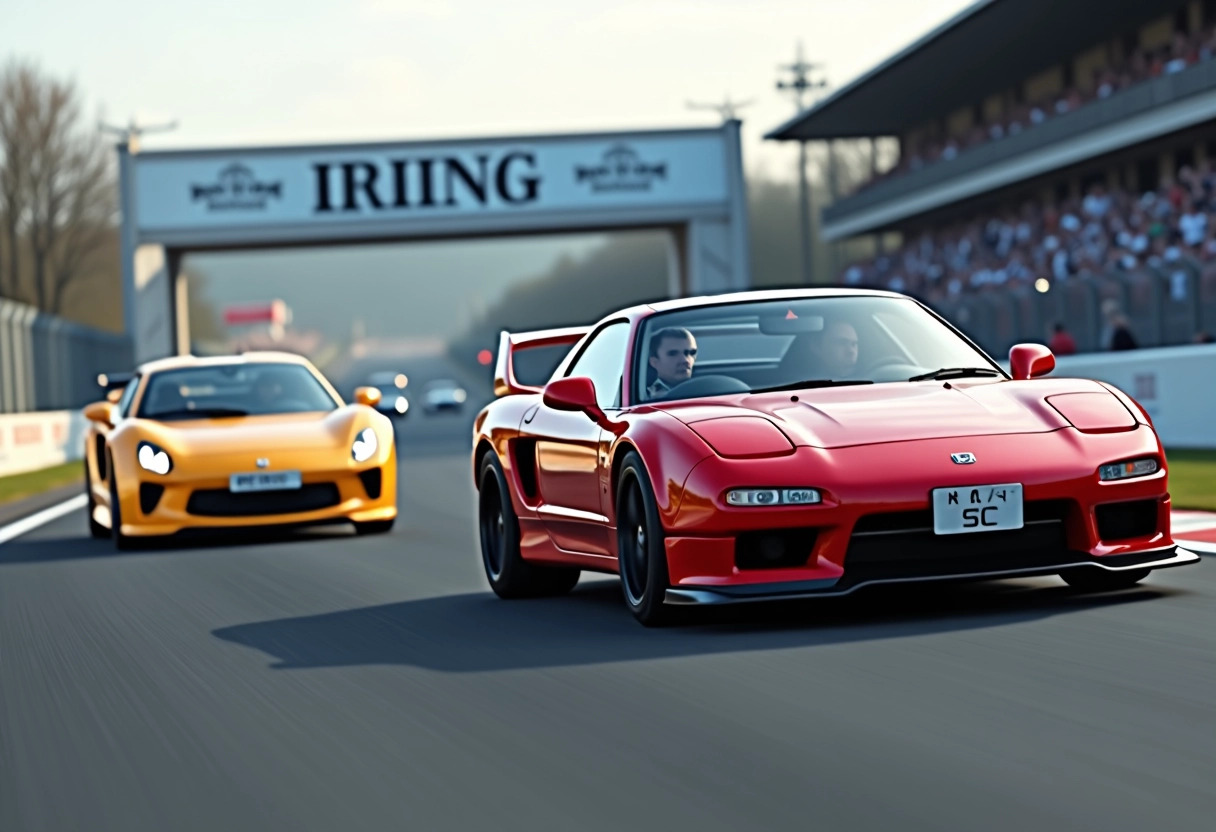
Modern Supercars and Their Innovations
The Japanese automotive industry continues to evolve, offering modern supercars with impressive performance. Among these innovations, the Infiniti Q50 Red Sport stands out with its 400-horsepower V6 engine and a top speed of 290 km/h. Weighing two tons, this supercar combines power and elegance, showcasing Infiniti’s craftsmanship.
Another notable model, the Acura Integra Type S, competes with its rivals thanks to its 320 horsepower and a top speed of 269 km/h. Priced at €55,600, this car strongly resembles the Honda Civic Type R but distinguishes itself with its own features and unique design.
The Toyota GR Yaris is another feat of the Japanese industry. With its 280 horsepower and a top speed of 230 km/h, this model weighs 1,280 kg. However, it is marked by a high ecological penalty. This does not detract from its dynamic qualities and appeal to sports driving enthusiasts.
The Subaru Impreza Sport-tech and the Suzuki Swift 1.4 Boosterjet Hybrid complete this overview. The Subaru, with its 271 horsepower and all-wheel drive, reaches 218 km/h and features two gearboxes, offering exceptional versatility. As for the Suzuki, with 129 horsepower and a top speed of 210 km/h, it stands out as the cheapest Japanese sports car at €23,250, while incorporating hybrid technology for better energy efficiency.
These models illustrate the diversity and innovation of Japanese supercars, confirming their prominent place in the world of sports cars.